Traditional Dried Apricots: Orange vs Brown Explained
Two bags of chewy dried apricots can look surprisingly different: one bright orange, the other dark amber or brown. Which should you choose, and does the darker fruit mean something is wrong?
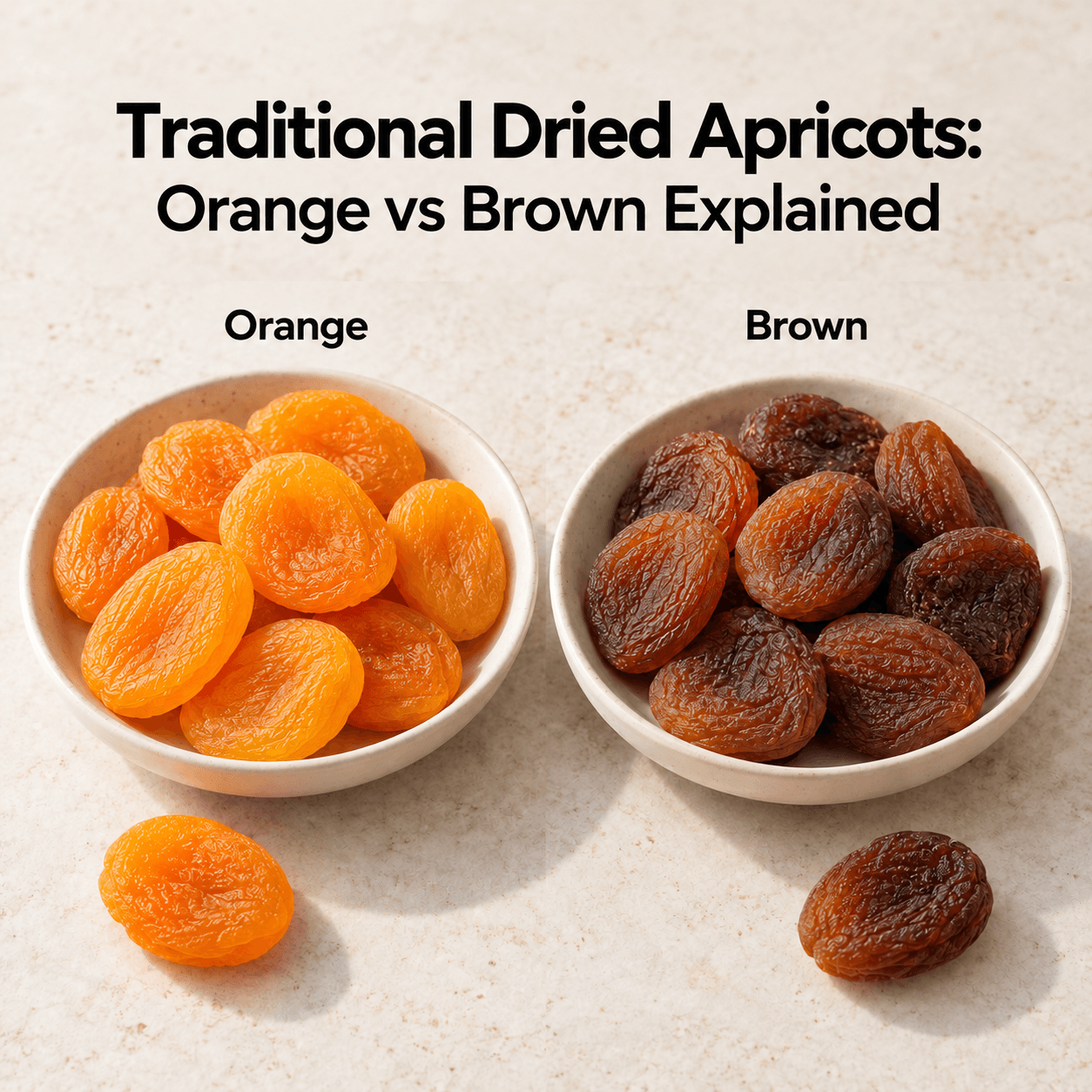
With conventional, chewy dried apricots, bright orange color is often associated with sulfur treatment that helps prevent browning. Unsulfured apricots commonly become amber or brown during drying and storage. Brown alone doesn't mean spoiled, and orange alone doesn't mean fresher.
Freeze-dried apricots are a separate format, typically chosen for their dry, crunchy bite. The orange-versus-brown comparison in this guide concerns conventional chewy fruit; it isn't a description of what freeze-drying does to their color.
Here's how to understand the difference, read the label, and choose the apricot snack you'll actually enjoy.
Blog
Why Are Traditional Dried Apricots Orange or Brown?
Apricots can darken during conventional drying and storage. Sulfur treatment helps control that change, so treated fruit often retains a brighter orange appearance.
Utah State University Extension explains that sulfur treatments help control fruit browning. This is a major reason you see both orange and brown versions of familiar chewy dried apricots.
Untreated fruit commonly develops a deeper amber or brown color. That darker appearance can be an expected characteristic of the product, rather than evidence that it has been sitting on a shelf too long.
Still, appearance cannot tell you the full story. Research on stored dried apricots found that variety, treatment, and storage conditions affected browning. The shade in a product photograph is a clue, not a substitute for the label.
Orange vs brown: a comparison of conventional chewy apricots
| What you're comparing | Orange conventional apricots | Brown conventional apricots |
|---|---|---|
| Common explanation for the color | Sulfur treatment may help retain orange color | Unsulfured fruit commonly darkens during drying and storage |
| Expected texture | Usually chewy; softness varies by product | Usually chewy; softness varies by product |
| What color doesn't establish | Freshness, added sugar, or overall quality | Spoilage, organic certification, or absence of added sugar |
| What to check before buying | Ingredients and any sulfite declaration | Ingredients and any unsulfured claim |
Both columns describe conventional dried fruit. A brown chewy apricot isn't another name for a freeze-dried apricot.
Does brown mean the fruit has gone bad?
Not by itself. An unsulfured product may normally be brown. But expected color also doesn't guarantee that a particular pack is in good condition.
Check the packaging, date, storage instructions, and the fruit itself. If the product seems damaged or different from its stated description, contact the seller. Neither a bright orange appearance nor a dark brown one is enough to judge freshness on its own.
Sulfured vs Unsulfured: What the Label Tells You
Sulfured or sulfited describes a treatment used to help preserve characteristics such as color. The ingredients may name sulfur dioxide or a sulfite.
Unsulfured indicates that the fruit hasn't undergone that sulfur treatment. It doesn't automatically mean organic, sugar-free, or free from every other added ingredient.
Imported packs may use the spellings “sulphured,” “sulphites,” or “sulphur dioxide.” These refer to the same terms spelled with “f” in American English.
For a practical comparison, turn the pack over and check:
1. Ingredients: Is apricot the only ingredient, or are sweeteners or preservatives listed? 2. Treatment information: Does the label state unsulfured or identify a sulfite? 3. Texture: Does the description promise a soft chew or a crisp bite? 4. Net weight: How much product will you receive?
When shopping online in the UAE, look for a readable ingredient list and a clear texture description. Product photography alone may leave both questions unanswered.
If you need to avoid sulfites
Choose using the label and supplier information. Don't assume that brown color or a particular drying method guarantees suitability.
The UK Food Standards Agency identifies sulfur dioxide and sulfites as substances that may be present in dried fruit and can affect people with a sensitivity. If the information on a product is unclear, ask the supplier before buying.
Freeze-Dried Apricots: A Crunchy Alternative
If your main question is “Which apricot gives me crunch?”, look for the words freeze-dried.
Conventional dried apricots are familiar for their chewy bite. Freeze-dried apricots are typically dry and crisp. This distinction concerns the drying format and eating experience, while “sulfured” and “unsulfured” concern sulfur treatment.
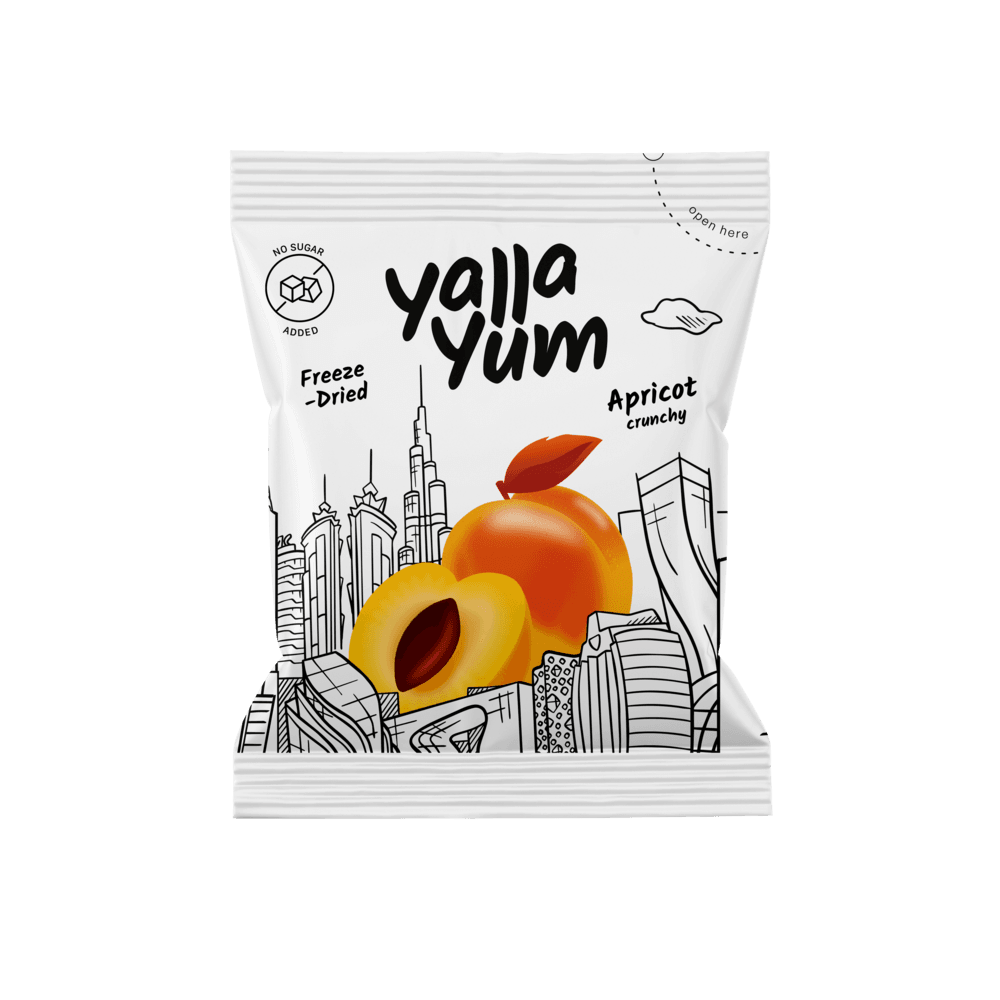
YallaYum's freeze-dried apricot is described as extra-crispy and made from 100% apricot, with no additives. It suits someone looking for a crunchy fruit snack rather than the soft bite of a traditional dried half.
Does freeze-dried mean brown?
No. “Freeze-dried” names a drying method, not a color category. You can't identify it simply by whether an apricot looks orange or brown.
The browning explanation above applies to the familiar comparison between sulfured and unsulfured conventional apricots. It shouldn't be read as a claim that freeze-dried apricots turn brown, or that their color can never change.
For a broader comparison of how the formats feel and how to use them, read our freeze-dried fruit vs dried fruit guide.
Does Unsulfured Mean No Added Sugar?
No. Sulfur treatment and added sugar are separate label questions.
An unsulfured apricot product could contain other ingredients, so read the whole list. Sugar, syrup, honey, or a sweet coating changes what you're buying.
Apricots also contain naturally occurring sugars. As the FDA's explanation of total and added sugars explains, total sugars include those naturally present in food and any that have been added.
A product made only from apricot can therefore taste sweet and list sugar on its nutrition panel. “No added sugar” doesn't mean sugar-free. Neither orange nor brown color tells you how much sugar is in a serving.
Compare nutrition using the same weight, then consider your intended portion. Chewy and freeze-dried fruit have different water contents, so similar-looking handfuls aren't a reliable basis for comparison.
Our guide to no-added-sugar snack labels explains what to look for when comparing packs.
Which Apricot Format Fits Your Day?
Start with how you want to eat the fruit. Then use the ingredients and pack information to narrow your choice.
For a familiar chewy snack
Choose conventional dried fruit if you enjoy a pliable, chewy bite. Compare orange and brown options by ingredients and your preferences, keeping in mind that softness varies between products.
If you're buying for a recipe, use the format it specifies. A chewy apricot used in a filling or cooked dish won't necessarily behave like the same amount of crisp freeze-dried fruit.
For crunch straight from the pack
Choose freeze-dried apricot when a crisp bite is part of the appeal. Check the ingredients and net weight so you know exactly what you're ordering.
For a first purchase, a smaller pack lets you try the texture before buying more. Treat it as its own snack experience, especially if you've only eaten soft dried apricots before.
For yogurt, breakfast bowls, or fruit mixes
Add freeze-dried pieces just before serving if you want to enjoy their crunch. Contact with yogurt or milk will soften them.
Taking breakfast to the office? Carry the dry fruit separately and sprinkle it on when you're ready to eat. You can also pair it with another crisp fruit snack; our guide to custom fruit blends offers ideas for finding a combination you enjoy.
For keeping the remaining fruit in good condition
Follow the instructions on your pack and close it promptly after serving. Utah State University Extension recommends keeping dried fruit in suitable original packaging or airtight containers.
YallaYum's apricot listing recommends a dry, dark place, protection from moisture and sunlight, and no refrigerator. For practical storage advice at home or work, see our guide to storing freeze-dried fruit in the UAE.
Frequently Asked Questions
Why are some traditional dried apricots brown?
Unsulfured conventional apricots commonly darken during drying and storage, becoming amber or brown. This can be their normal appearance and doesn't automatically mean they're old or spoiled. Variety and storage also affect color, so check the product description, ingredients, packaging, and condition instead of judging by shade alone.
Are orange dried apricots always treated with sulfites?
Bright orange color is often associated with sulfur treatment, but color alone doesn't prove how a product was treated. Read the ingredients and any sulfite declaration. If you need to avoid sulfites and the information is unclear, ask the supplier rather than relying on the product photograph.
Does brown color mean an apricot is freeze-dried?
No. Brown usually describes the appearance in a comparison of conventional chewy apricots, while freeze-dried describes a separate drying format. The freeze-dried format is typically crisp rather than chewy. Check the pack's drying and texture description; orange or brown color alone cannot identify a freeze-dried product.
Does unsulfured mean sugar-free or organic?
No. Unsulfured refers to the absence of sulfur treatment. It doesn't establish organic certification or the absence of added sweeteners. Apricots also naturally contain sugars. Check certification if organic matters to you, read the complete ingredient list, and use the nutrition panel to understand the product's sugar content.
Are freeze-dried apricots crunchy?
They are typically dry and crunchy, unlike conventional chewy fruit. YallaYum describes its apricot snack as extra-crispy and made from 100% apricot. Enjoy it dry for that texture, and add it to yogurt or milk just before eating because contact with moisture will soften the pieces.
Can I replace chewy apricots with freeze-dried pieces in baking?
Don't assume they work as a direct one-for-one replacement. Their moisture and texture differ, which can affect a filling, batter, or cooked dish. Follow the recipe's specified format where possible. Freeze-dried pieces are simpler to use as a crunchy finishing touch added just before serving.
Choose Your Apricot by the Bite You Want
For conventional dried apricots, the orange-versus-brown comparison helps explain differences in color preservation. Your ingredient list provides the detail you need to make a choice.
For a crunchy snack, look specifically for freeze-dried apricots. Try YallaYum's freeze-dried apricot for an extra-crispy, single-ingredient option, or explore the fruit snack range to find a flavor to enjoy alongside it.