How Freeze-Drying Works
Freeze-drying, also called lyophilisation, removes water from fruit in three broad stages:
Because the water leaves as vapour instead of being cooked out, the fruit keeps much of its original shape and colour. Its structure stays porous, and that is where the light crunch comes from.
- Freezing: the fruit is frozen solid, so the water inside it turns to ice.
- Primary drying: under low pressure and gentle warmth, the ice turns straight into vapour without melting first. This is called sublimation.
- Secondary drying: the last bound moisture is removed, and the fruit is packed quickly in moisture-barrier packaging.
How Traditional Dried Fruit Is Made
Traditional drying uses sun, warm air or a dehydrator over hours or days. As the water evaporates the fruit shrinks and its natural sugars become more concentrated, which gives a chewy, dense piece.
Some producers add sugar, syrup or oil to keep pieces soft or stop them sticking together, and sulphites are sometimes used to hold the colour of fruits such as apricots. None of this is hidden: it appears on the ingredient list, which is why the label is worth reading.
Texture and Taste
Freeze-dried fruit has a crunchy texture because most moisture is removed after freezing. Dried fruit keeps more chew and density because it is dried with warm air or other dehydration methods. Both can taste sweet because fruit naturally contains sugars.
Freeze-dried fruit also dissolves quickly on the tongue and softens fast in milk or yogurt, while dried fruit holds its chew in liquids and baking.
Ingredients to Check
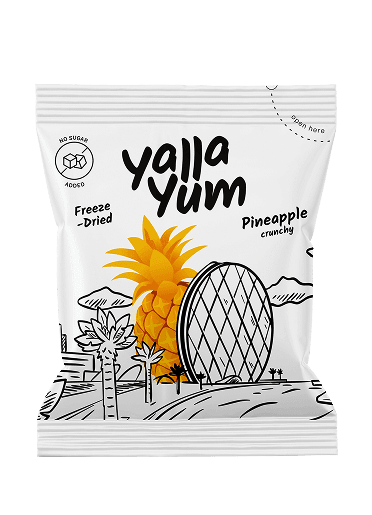
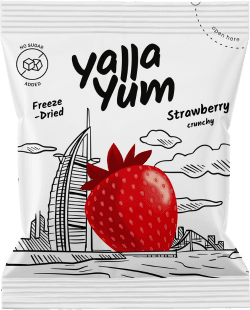
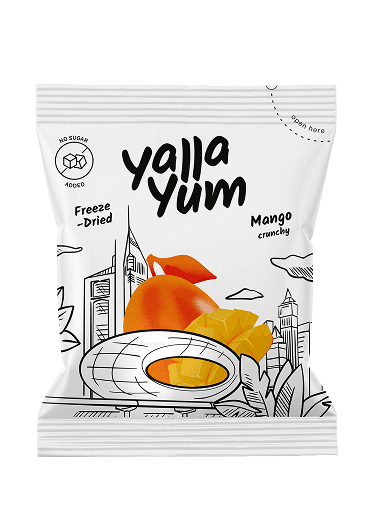
For either product, shoppers should check whether sugar, syrups, oils, preservatives or sulphites were added. Yalla Yum focuses on freeze-dried fruit snacks made from real fruit with no added sugar.
- The first ingredient should be the fruit itself.
- Sugar, glucose syrup, fruit juice concentrate or honey mean sweetness was added.
- Vegetable oil is sometimes used to coat dried fruit pieces.
- Sulphites (for example sulphur dioxide, E220) are listed when used as a preservative.
Storage and Shelf Life
Both are shelf-stable while the pack is sealed. Freeze-dried fruit is very dry, so once opened it pulls moisture from the air, and in humid UAE weather it can lose its crunch if the pack is left open.
- Reseal the pack tightly straight after opening.
- Store it in a cool, dry cupboard away from direct sunlight.
- Avoid the fridge for opened packs: condensation softens the fruit.
- For the best crunch, finish an opened pack within a few days, and always follow the best-before date printed on the pack.
When Freeze-Dried Fruit Works Best
Its crisp texture makes it easy to portion and pack. A few favourites:
When Traditional Dried Fruit Makes Sense
Dried fruit suits baking, cooking, stuffing and trail mixes, where a soft, chewy piece holds up over time. Freeze-dried fruit behaves differently in wet batters, but crushed into a powder it adds natural colour and fruit flavour to frosting, smoothies, overnight oats and yogurt.