Dried Fruit Nutrition Facts: How to Read the Label
Dried fruit nutrition facts are easy to misread. The numbers look reasonable until you notice the serving size is four pieces, or that sugar has been added on top of what the fruit already contains naturally. This guide covers what each part of the label actually means, what to watch for, and how different drying methods affect what ends up in the packet.
Blog
What the Nutrition Panel Is Actually Telling You
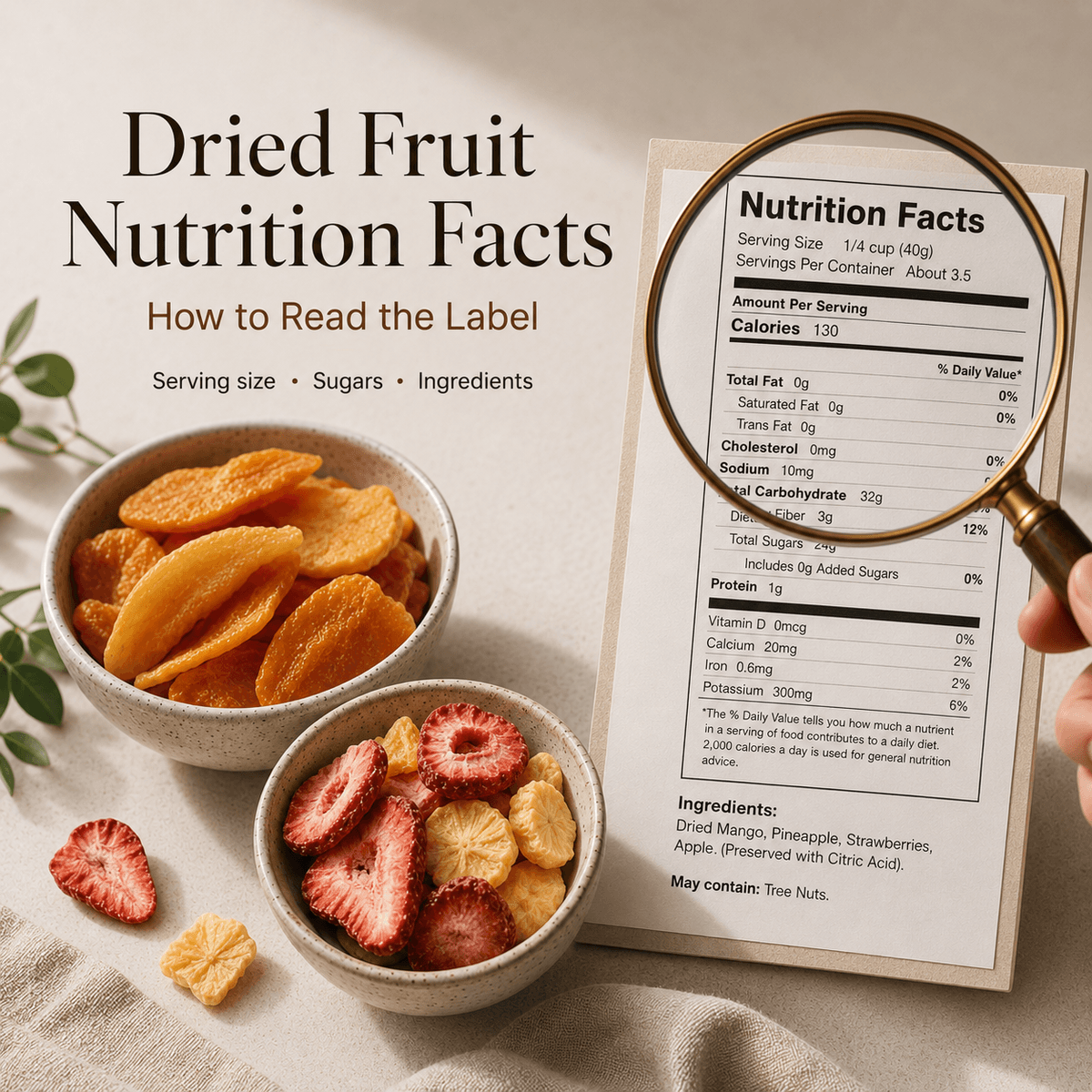
The nutrition panel on dried fruit packaging follows a standard format: energy (calories or kilojoules), total fat, carbohydrates, sugars, protein, and sodium. Some labels also include fibre, vitamins, and minerals.
Start with the serving size. Dried fruit is denser and lighter than fresh, so manufacturers often list a serving of 20 to 30 grams. That can look like a small handful, but it represents the sugar content of a much larger portion of fresh fruit.
Total sugars on the label covers both naturally occurring fruit sugars and any sugar added during processing. Older label formats do not always separate the two. In the UAE, food labels follow Gulf Standardization Organization (GSO) guidelines, which require total sugars to be declared but do not always mandate a separate line for added sugars. That means the ingredient list, not the numbers panel, is where you need to look.
How to Spot Added Sugar on the Ingredient List
The ingredient list is where the real information sits. Ingredients appear in descending order by weight. If any form of sugar appears near the top, it was added in significant quantity.
Added sugar appears under many names on dried fruit labels:
- Sucrose
- Glucose syrup
- Dextrose
- Cane sugar
- Fruit juice concentrate (used as a sweetener, not a fruit ingredient)
- Maltodextrin
Some brands coat dried fruit in a light sugar syrup before or after drying to improve shelf life or enhance sweetness. This adds calories and carbohydrates without adding nutritional value. If the ingredient list reads "mango, sugar" or "apricot, glucose syrup," the product contains added sugar.
A label that lists only the fruit name — "strawberry" or "mango" with nothing else — indicates no added sugar. Always check the current product label to confirm, as formulations can change.
Calories in Dried Fruit vs Fresh Fruit
Drying removes water, which concentrates everything — natural sugars, calories, and nutrients — into a smaller volume. A 100-gram portion of fresh mango contains roughly 60 calories. The same weight of conventionally dried mango can contain 300 calories or more, depending on whether sugar was added.
That does not make dried fruit a poor choice. It means portion size matters more than it does with fresh fruit. A 20 to 30 gram serving of plain dried fruit with no added sugar still delivers fibre, natural fruit sugars, and some micronutrients in a shelf-stable, portable format.
The calorie concentration is one reason dried fruit works better as a snack addition than as a direct substitute for a whole piece of fruit.
Freeze-Dried vs Conventionally Dried: What Changes on the Label
The drying method affects the nutritional profile. Conventional drying uses heat over several hours. Freeze-drying removes moisture differently — the fruit is frozen first, then pressure is reduced so the ice converts directly to vapour without passing through a liquid stage.
Heat-based drying degrades some heat-sensitive vitamins, particularly vitamin C. Freeze-drying operates at low temperatures, which preserves more of the original nutrient content. The texture differs too: freeze-dried fruit is crisp and light, while conventionally dried fruit is chewy and dense.
On the nutrition label, freeze-dried fruit tends to show a higher concentration of nutrients per gram than fresh fruit, simply because water has been removed. The fruit itself has not been altered, and no additives are required to achieve the shelf-stable result.
For a more detailed comparison, the freeze-dried fruit vs dried fruit guide covers the key distinctions in plain terms.
What "No Added Sugar" Actually Means
"No added sugar" means no sugar, syrup, or sweetener was introduced during processing. The product contains only the sugars naturally present in the fruit.
This is not the same as "sugar-free," which implies total sugar content is negligible. Fruit contains natural fructose and glucose, so no dried fruit product is genuinely sugar-free. "No added sugar" is the accurate label claim for a product made from fruit alone.
When you see this on a label, cross-check it against the ingredient list. The only ingredient should be the fruit name, with no sweeteners listed alongside it.
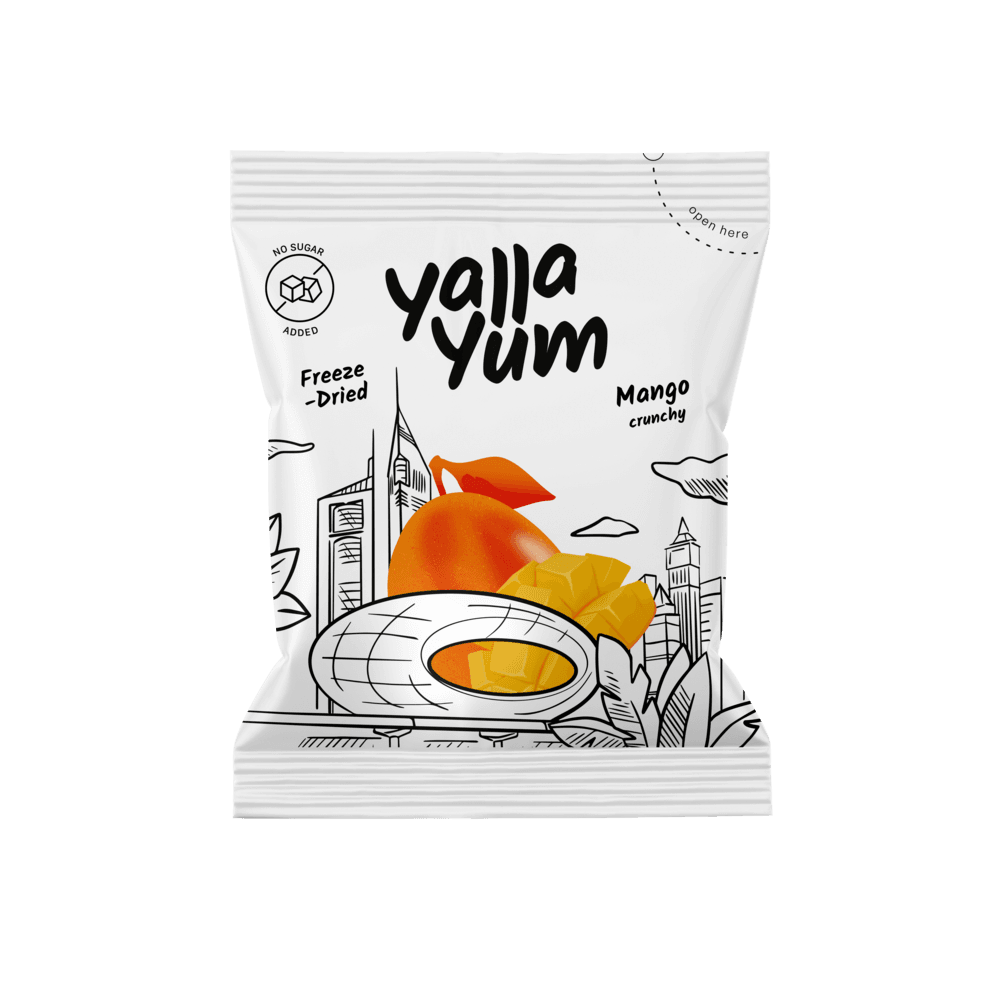
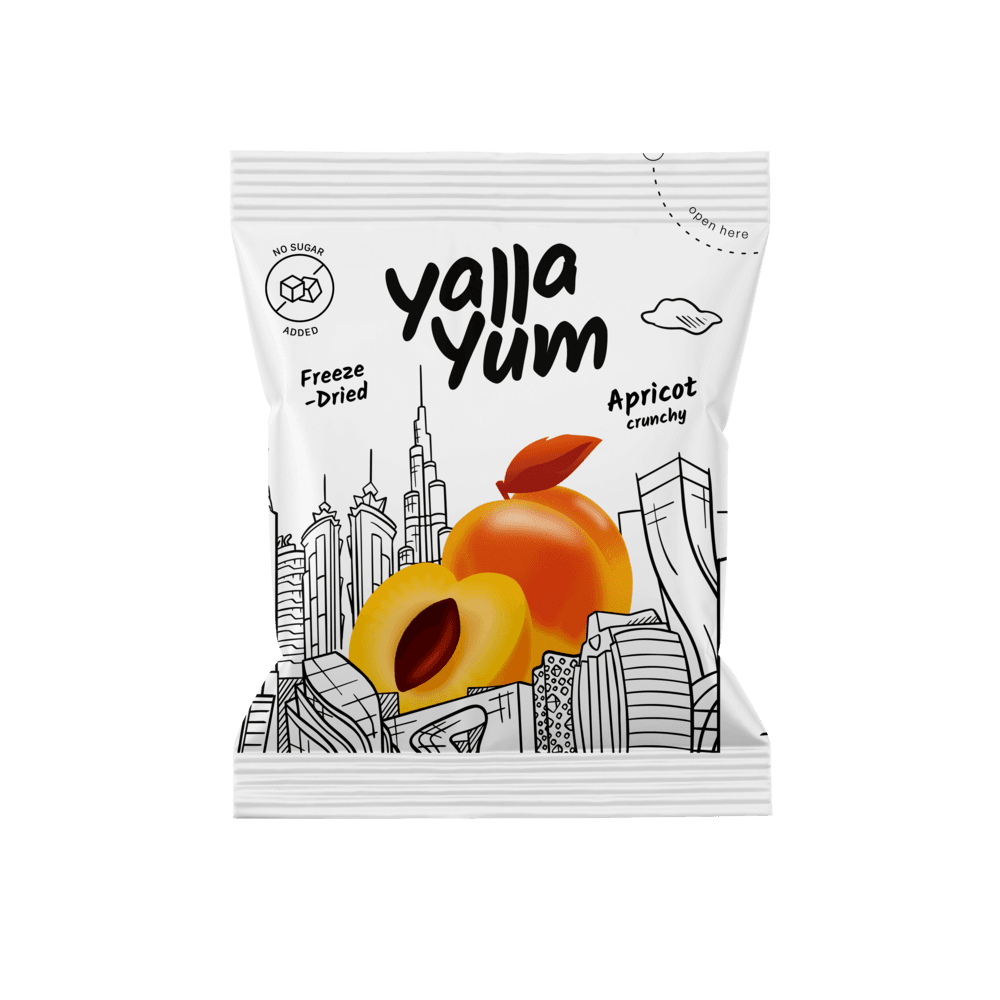
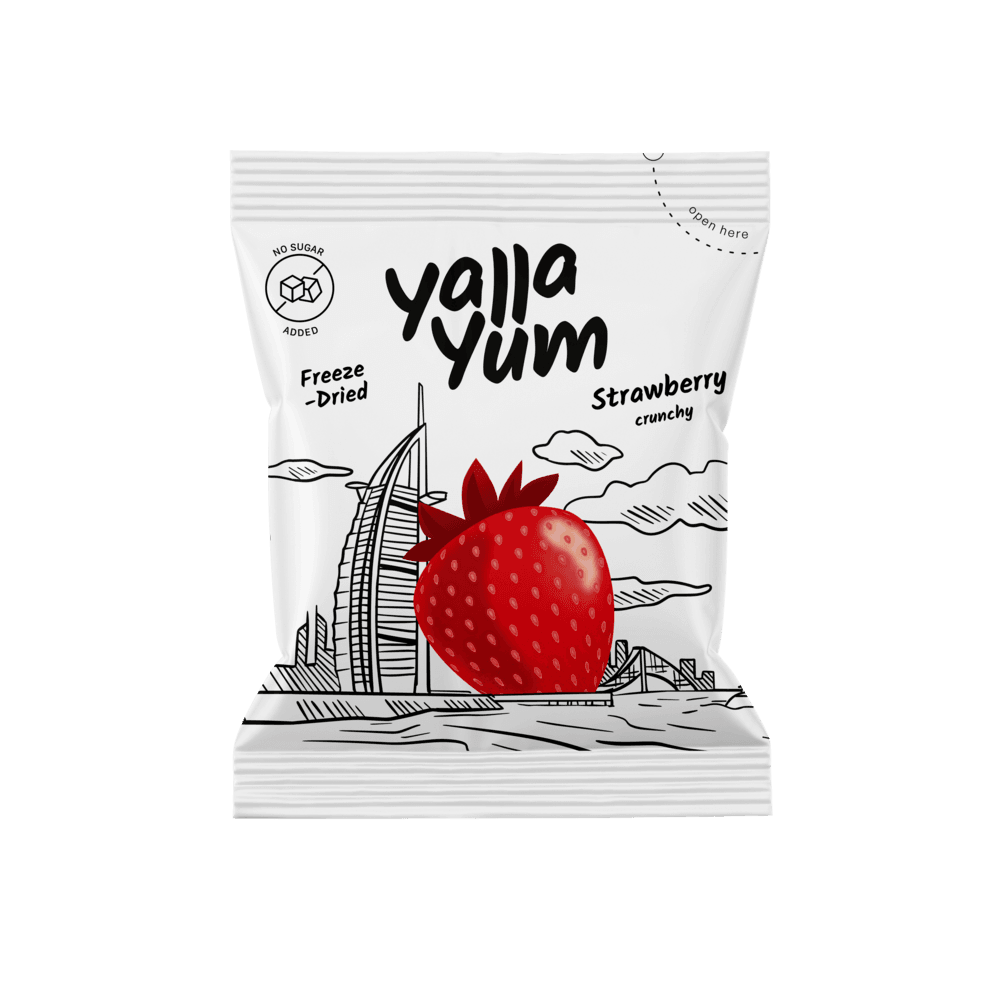
Yalla Yum positions its freeze-dried snacks as real fruit with no added sugar. The ingredient list on each product reflects this. Always check the current product label to verify the formulation you receive.
If you are shopping for no added sugar fruit snacks in the UAE, understanding this distinction helps you filter out products that use "natural" or "fruit-based" language while still including sweeteners.
Fibre, Vitamins, and What Gets Preserved
Dried fruit retains most of its dietary fibre. Fibre is not water-soluble, so drying does not remove it. A 30-gram serving of dried apricot or mango can contribute meaningfully to daily fibre intake.
Fat-soluble vitamins — A, E, and K — are generally stable through drying. Water-soluble vitamins, particularly vitamin C, are more vulnerable to heat. Freeze-drying preserves more vitamin C than conventional drying because of the lower processing temperatures.
Minerals such as potassium and iron are largely unaffected by drying. Dried apricots, for example, are a recognised source of both in small portions.
Not every micronutrient will appear on the label. If vitamins and minerals are not declared, it does not mean they are absent — it means the manufacturer chose not to list them, or the amounts fall below the threshold required for declaration.
Reading the Label in Practice
When you pick up a packet of dried fruit, run through this sequence:
1. Check the serving size first. Everything else on the label is relative to that number. 2. Look at total sugars per serving. Compare it to the serving size to understand the sugar density. 3. Go to the ingredient list. If anything other than fruit appears, identify what it is and why it is there. 4. Look for added sugar under any of its alternative names. 5. Check sodium. Some dried fruits are processed with salt. This is uncommon but worth noting. 6. If the label says "no added sugar," confirm it in the ingredient list.
This takes about 30 seconds once you know what you are looking for. It is the most reliable way to compare products across brands.
For a broader view of what to look for when shopping for healthy snacks in Dubai, the same label-reading principles apply across most packaged snack categories.
Frequently Asked Questions
What is the difference between total sugars and added sugars on a dried fruit label?
Total sugars covers everything present in the product — both naturally occurring fruit sugars and any sugar added during processing. Added sugars refers only to what was introduced during manufacturing. If the label shows only total sugars, check the ingredient list for added sweeteners.
Does freeze-dried fruit have more sugar than fresh fruit?
The natural sugar content per gram is higher in freeze-dried fruit because water has been removed. How much sugar you actually consume depends on portion size. Freeze-dried fruit with no added sugar contains only the sugars naturally present in the original fruit.
Why does the serving size on dried fruit packets seem so small?
Drying concentrates the fruit. A 20-gram serving of dried mango represents a much larger volume of fresh mango. Manufacturers set serving sizes to reflect a realistic single portion of the dried product, not the equivalent fresh weight.
What should I look for to confirm a product has no added sugar?
Check the ingredient list. If the only ingredient is the fruit itself — "mango" or "strawberry" with nothing else listed — the product has no added sugar. Any ingredient that functions as a sweetener, including glucose syrup, cane sugar, or fruit juice concentrate, means sugar has been added.
Is freeze-dried fruit more nutritious than conventionally dried fruit?
Freeze-drying preserves more heat-sensitive nutrients, particularly vitamin C, because the process uses low temperatures. Conventional drying uses heat, which degrades some vitamins. Both methods retain fibre and minerals well. The difference is most significant for vitamin C content.
Where can I find freeze-dried fruit with no added sugar in the UAE?
Yalla Yum sells freeze-dried fruit snacks made from real fruit with no added sugar, with delivery across the UAE. You can browse the range at yallayum.ae.